
Dr. B. R. Ambedkar: A Visionary Thinker, Reformer & Architect of Modern India
Few personalities in modern Indian history have left as deep and lasting an impact as Dr. Bhimrao Ramji Ambedkar—a jurist, economist, social reformer, philosopher, and chief architect of the Indian Constitution. His life is a story of courage, perseverance, and an unwavering commitment to justice and equality.
Early Life and Education Dr. Ambedkar was born on 14 April 1891 in Mhow (present-day Madhya Pradesh). Despite facing harsh discrimination due to his caste, he pursued education with extraordinary determination.
Some milestones of his academic journey include:
B.A. from Bombay University
M.A. & Ph.D. in Economics from Columbia University
D.Sc. in Economics from the London School of Economics
Barrister-at-Law from Gray’s Inn, London
His global, multi-disciplinary education shaped his vision for a just and progressive India.
Fight Against Social Discrimination
Ambedkar dedicated his entire life to eliminating social injustices, especially caste-based discrimination. Some key movements led by him include:
Mahad Satyagraha (1927): Fight for Dalits’ right to access public water tanks
Kalaram Temple Entry Movement: A demand to allow temple access for the oppressed
Advocacy for Education & Employment Rights: Encouraging the marginalized to pursue education as a tool of empowerment
His activism brought national and international attention to the suffering of oppressed communities.
Role in Drafting the Indian Constitution In 1947, Dr. Ambedkar was appointed the Chairman of the Drafting Committee of the Constituent Assembly. He played the most pivotal role in shaping India’s Constitution—one of the world’s lengthiest and strongest democratic documents.
His guiding principles included:
Liberty
Equality
Fraternity
Justice—social, economic, and political
He also ensured provisions for:
Fundamental Rights
Affirmative action
Protection of minorities
Democratic governance
Dr. Ambedkar’s constitutional vision continues to guide India to this day.
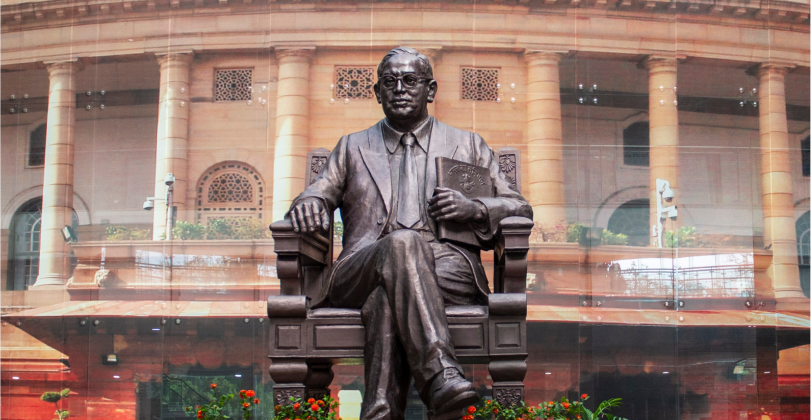
Ambedkar’s Writings: A Legacy of Thought
Dr. Ambedkar was a prolific writer whose works combined sociology, economics, law, and philosophy. Some of his most influential books include:
Annihilation of Caste – A revolutionary critique of caste hierarchy
The Buddha and His Dhamma – His interpretation of Buddhist philosophy
Who Were the Shudras? – A historical analysis of caste origins
Thoughts on Pakistan – A political study influencing India's stance during Partition
The Problem of the Rupee – A landmark work on Indian economics
His writings remain widely studied for their intellectual depth and practical insights.
Conversion to Buddhism & His Final Vision On 14 October 1956, Dr. Ambedkar embraced Buddhism, along with lakhs of followers, marking the beginning of the Dalit Buddhist Movement. He believed Buddhism offered equality, rationality, and a path away from caste oppression.
His final message to society was captured in his famous words:
“Educate, Agitate, Organize.”
Conclusion Dr. B. R. Ambedkar’s life was a mission—to build a society where every human being has dignity and equal opportunity. He remains an icon of justice, social reform, and progressive thought. His ideas continue to inspire generations across India and the world.

0 Comments